
“By the time I was fourteen the nail in my wall would no longer support the weight of the rejection slips impaled upon it. I replaced the nail with a spike and went on writing.” – Stephen King

“By the time I was fourteen the nail in my wall would no longer support the weight of the rejection slips impaled upon it. I replaced the nail with a spike and went on writing.” – Stephen King

What an interesting way to look at building and architecture.
I accidentally clicked on this TED talk while searching for another, and I’m glad I did.
We’re surrounded all the time by buildings.
I can see six of them outside of the window right about now. I wonder what stories they could tell?

When I was a kid, I couldn’t just read books and comics. I had to try create my own.
A slideshow of creativity was already brimming in my head that I had to find an outlet for.
It hasn’t stopped since and I hope it never does.
If I hadn’t have started creating, I genuinely reckon my head may have exploded.
Or I’d have had migraines, at the very least.
So, I did what anyone tends to do when they don’t have much of a foothold into what they want.
I read a lot of theory.
You’d be surprised how many ‘learn how to write fiction’ books that there are for kids. Millions.
Out of all of them, though, there was a quote from this book that stood out to me:

(Write your own chillers by Pie Corbett).
I’ll paraphrase the quote, as the years have eroded my memory:
“A good writer should be like a magpie”.
Simple, isn’t it?
So, when a magpie builds its nest it takes little pieces of things it likes (normally gold/silver) and puts them there.
Meaning that it has a little treasure chest of good stuff to come back to.
We read things all the time in life. Whether it be from books, newspapers, blogs or those random articles that float across our timelines and newsfeeds.
While some of them are just schlock – some can be inspiring, or at the very least interesting.
You should make a note of these things.
In a notepad if you’re old school, or on Google Keep if you’ve embraced the 21st century.
I do it all the time. Everything from sales copy to film reviews.
While you shouldn’t jack another writer’s words and use it in your work, you can use it to inspire you.
When Picasso first started up his gig as an artist he used to borrow, re-imagine & copy little bits from everyone around him.
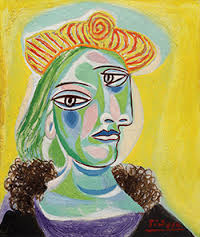
It was through doing this that he worked out what he was good at, and what he wasn’t.
This led to him finding his own style and niche in the market. He did alright, didn’t he?
Newspapers are great for magpies. Great stories often start after the writer’s interest has been piqued by an article in their local chip wrapper.
Moral of the story is – have your own moodboard of quotes and things that inspire you and use them as fodder for your own creativity.
I liked this TED talk, so I thought you might want to see it.
The guy’s called Chipp Kidd and he designs book front covers for a living.
How’s about that for a profession?
I wonder how many times he’s heard the old ‘can’t judge a book by its cover’ line?
Anyway, while I mostly talk about writing I like to learn about design too. And, this raises some interesting points about first impressions.
P.S TED stays for technology, entertainment and design. Who knew it?!

At University one of my favourite things to do was to play football.
The big characters, the big moments and the crusty football socks.
It was great.
Most of the time we played on the University astro-turf pitches.
Now you’d think, as students, they might let us use them for free?
Well, that wasn’t the case.
So, every few days we’d have the problem of coughing up enough cash to book it. Which, for penniless students, was a stumbling block.

(back in the day, 2nd in from the left in case you care).
Sure, everyone could scrape a few quid out of their sofas (along with old pizza) on the day – BUT someone had to actually supply the money up front and book it.
No one really wanted to do that. Our group chats on Whatsapp and Facebook would be full of “who wants to book today?” or “whose turn is it now? I did it last week”.
70% of the time no one would jump at the chance. So we’d either have to really coerce one of the richer kids (or rather one of the guys who could manage their student loan), or we just wouldn’t play.
You know what the problem was back then? No one was accountable. It was no one’s specific duty to book, so everyone looked to someone else to step up.
We should have had a rota, or at least a plan…but it was just left up to being ‘somebody else’s job’.
It’s amazing how often I see this with real working adults, particularly those who are working on collaborative projects or trying to create things.
If you don’t assign ownership to someone, or make it their responsibility – there’s a high chance that it won’t get done!
Think of it from a sporting point of view. Imagine going out to play a team game and not giving anyone a position.
Sure, you may adapt after a while…but I don’t think you’d win much.
As much as I’m all for free-flow and creativity – structure is structure for a reason. So, next time you’re working on something make sure everyone knows their roles and responsibilities.
The dead project graveyard is massive, and I wonder how many of those projects died due to a lack of structure?
I’ll leave you with this little saying – the more creative things I get involved with, the more relevant it becomes:
This is a story about four people named Everybody, Somebody,

Anybody, and Nobody.  There was an important job to be done and

Everybody was asked to do it.  Everybody was sure Somebody would

do it.  Anybody could have done it, but Nobody did it.  Somebody

got angry about that, because it was Everybody's job.  Everybody

thought Anybody could do it but Nobody realized that Everybody

wouldn't do it.  It ended up that Everybody blamed Somebody when

Nobody did what Anybody could have done.

…it’s not the fact that only a small % of us will ever actually make it as professional writers.
…it’s not even the fact that the Twilight series was published.
Nope.
The scariest thing about writing is that every sentence that you write for an audience is a battle in its own right.
Because every sentence that you write is fighting for your audience’s attention, to get them to read the next one.
As you well know, we live in a time of constant distraction. The humble writer has to compete with Tinder alerts, PPI sales calls and Call of Duty deathmatches.
Never has the written word faced such a challenge. How many people do you know who genuinely find it easy to read long articles, or finish books these days?
This is especially applicable if you’re writing content for marketing. In ‘feeds’ full of other shareable content every word you write is a warrior of its own, fighting to slay the other posts around it so it can reel the ‘scroller’ in.
If you’re writing a book or a story, I guess you have a little more leeway – as your readership will have (most likely!) paid for what you’ve done.
And, when you’ve paid money for something, you want to give it the chance to prove that it was worth your money. I mean, no one wants to look like they make bad financial decisions do they?
Heaven forbid.
But, even then, too many pedestrian sentences and too little flair will soon turn your fans away.
So, there’s the thought for today. Every sentence that you write should promote the fact that it’s worth the reader’s while to read on.
You’re only as good as your last sentence.

A different type of creativity to what I usually talk to you about. But, creativity all the same.
Growing up as an Arsenal fan in the late 1990s there was no player who I admired more than Dennis Bergkamp.
Whether it was dribbling the ball past players, scoring incredible goals or pulling out match-winning bits of skill, Bergkamp had it all.
By that age I was sure I’d never be a professional footballer (I was right), but I remember remarking to myself that I hoped to be as good at whatever I do as he was at football.
I’m still trying.
But it pays to have heroes, and it’s worth reminding yourself that you can spread those who inspire you far and wide.
They don’t all have to be writers or artists, or whatever field it is that you do.
Inspiration is a rare thing to find – learn about your idols when you can. I recently ordered the most relevant book on Bergkamp to find out more about what made the legend.
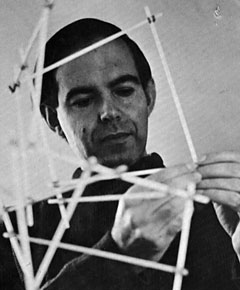
“Creative thinking – in terms of idea creativity – is not a mystical talent. It is a skill that can be practiced and nurtured” – Edward De Bono

I feel I should start off with a disclaimer – this isn’t about the really mediocre Adam Sandler film from a few years back.
Ha, what’s that you say…?
Which mediocre Adam Sandler film?!
You joker, you!
I mean the one that’s actually called ‘Click‘, of course.
This is what I mean by ‘the click’…
When I was at first school, circa mid-late 90s, there was a kid I used to sit near who never really said anything.
Looking back now, I guess he was super-shy.
If you posed him with a question, he’d simply write his answer on his notepad and show it to you.
Whenever I tried to ask him anything, all he seemed to do was draw a picture of a stick man.
This confused me.
I wanted to borrow a rubber once. He scrawled something down, and tilted his notepad to show me.
It was a picture of a stick man.
Again.
In the end I went with the cavalier attitude of helping myself to the rubber. He never told me off, so I assumed all was fine.
One day, not long after he’d drawn one of his stick men, his notepad fell onto the floor and I picked it up.
As I handed it to him I saw that the word ‘OK’ was written on it. For a minute I was perplexed – how had a drawing of a stick man turned into the word OK?
AND THEN I REALISED!
I was always looking at his notepad sideways on!
He was writing the word ‘OK’!
It was just that, due to the way he wrote it and the angle I viewed it from (kinda sideways on), it looked like a stick man!
That was it. That was the ‘click’ moment. Something clicked for me that I’d been trying to understand for ages. Boy, did my eight year old self feel a fool for not working it out sooner.
I feel that we should translate this to writing. When you’re putting together text for an audience to read, it needs to flow. Nothing turns a reader off more than when they snag on a word or a sentence.
I have no authority on the subject…but I reckon that, if a reader snags more than three/four times while reading something, they’ll give up unless it’s important.
Before you post or share anything, you need to make sure it clicks. You need to review what you’ve written and keep on editing until it flows.
Edit it until it reads so smoothly that it feels as if the reader doesn’t even need to concentrate to read it.
Because you want everyone to read your content. You don’t want 70% to think you mean ‘OK’, and the other 30% to think you mean ‘stick man’.
As they say, writing is re-writing. If it doesn’t click, it doesn’t read well.
Next time you’re in front of that Word document, keep going until you CLICK.
…a bit of colour can spark the creative mind.

 whyididntwritetoday.com