Whether it be a thoughtful ‘happy birthday’ post on a friend’s Facebook wall, a nagging email to the colleague who keeps using your instant coffee or a doodle on the side of your notepad.
So, how come when you set down to write that bestseller, or to draw that masterpiece we’ve been imagining, it can be so hard to get going?
I’m sorry to say that there’s no easy fix.
No magic tablet that, once you swallow it, makes you more of a creative juggernaut. If only that film Limitless was real, ey?
Here are 3 creativity hacks that might just make things a little easier…
Here are a few things that can be done to get the creative juices flowing.
FUEL
Your mind is a vehicle. If you don’t put the right fuel in, you’re not gonna get the right results out.
And, if you put nothing into it at all…well, you’re not going to get anywhere.
If you want to create, you need to read.
A wide breadth of things. In my current ‘to-read’ list I’ve got everything from a book on spin doctors to an account of Voodoo activity in Haiti. Neither of those are topics I’m looking to pursue – but that doesn’t mean that there aren’t elements there that won’t inspire me.
Let’s say you’re writing a fantasy book.
You’ve read all the classics and some contemporary pieces, and you’re still out of ideas. Why don’t you read about politics?
I mean after all, most fantasy worlds have some sort of government…in fact they’re often run by extreme dictatorships – maybe you could draw inspiration?
“Big ideas come from the unconscious. This is true in art, in science, and in advertising. But your unconscious has to be well informed, or your idea will be irrelevant. Stuff your conscious mind with information, then unhook your rational thought process. You can help this process by going for a long walk, or taking a hot bath, or drinking half a pint of claret. Suddenly, if the telephone line from your unconscious is open, a big idea wells up within you.” – (Ogilvy, David – Ogilvy on Advertising.)
I’ve already covered this tip on another post – but it’s such an important one that I think it belongs in any list.
Often we force ourselves to be creative, and it doesn’t really work.
In my final year at University, I’d schedule days and days to be in the library to work on my final project. But yet, words didn’t come at times – everything around me was distracting. The more I tried to stop myself from being distracted, the more distracted I was.
I wish I’d heard of the 33.3 method then. Basically a mega-productive author and copywriter, Eugene Schwartz, worked out that the maximum time he could be creative for was 33 minutes and 3 seconds. During that time he’d ban himself from leaving the chair, and once the timer went off he go be distracted for ten minutes and then return for another 33.3 spell.
It really works. I know a lot of writers who have employed this, and it’s a good ‘un. I reckon it could work for making music or designing something too.
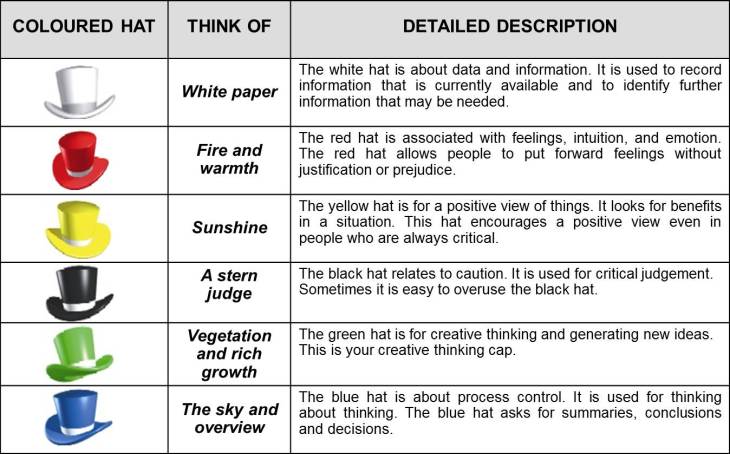
SIX THINKING HATS
This technique works best if you’re working on a group project, but I reckon you can also do it when working solo – it just requires a bit of role-play. No the Dungeons ‘n’ Dragons type, mind you.
It was originally thought up by Dr. Edward De Bono. It works well once you’ve got the basic concept of what you want to do. If you put on each hat and analyse what it is you’re going to be creating you should have a better idea by the end of it.
More a preparation technique…but I don’t believe that preparation inhibits creativity.
So, there you have it…
Those are just a few things that I’ve found that help me. They’re also good for productivity in general.
If you’re passionate about being creative, you should also be passionate about being productive.
Particularly if you don’t get much time to be creative in your daily life.
“Productivity is being able to do things that you were never able to do before.” ~ Franz Kafka
“By the time I was fourteen the nail in my wall would no longer support the weight of the rejection slips impaled upon it. I replaced the nail with a spike and went on writing.” – Stephen King
I’ll paraphrase the quote, as the years have eroded my memory:
“A good writer should be like a magpie”.
Simple, isn’t it?
So, when a magpie builds its nest it takes little pieces of things it likes (normally gold/silver) and puts them there.
Meaning that it has a little treasure chest of good stuff to come back to.
We read things all the time in life. Whether it be from books, newspapers, blogs or those random articles that float across our timelines and newsfeeds.
While some of them are just schlock – some can be inspiring, or at the very least interesting.
You should make a note of these things.
In a notepad if you’re old school, or on Google Keep if you’ve embraced the 21st century.
I do it all the time. Everything from sales copy to film reviews.
While you shouldn’t jack another writer’s words and use it in your work, you can use it to inspire you.
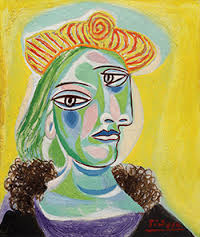
When Picasso first started up his gig as an artist he used to borrow, re-imagine & copy little bits from everyone around him.
It was through doing this that he worked out what he was good at, and what he wasn’t.
This led to him finding his own style and niche in the market. He did alright, didn’t he?
Newspapers are great for magpies. Great stories often start after the writer’s interest has been piqued by an article in their local chip wrapper.
Moral of the story is – have your own moodboard of quotes and things that inspire you and use them as fodder for your own creativity.
At University one of my favourite things to do was to play football.
The big characters, the big moments and the crusty football socks.
It was great.
Most of the time we played on the University astro-turf pitches.
Now you’d think, as students, they might let us use them for free?
Well, that wasn’t the case.
So, every few days we’d have the problem of coughing up enough cash to book it. Which, for penniless students, was a stumbling block.
(back in the day, 2nd in from the left in case you care).
Sure, everyone could scrape a few quid out of their sofas (along with old pizza) on the day – BUT someone had to actually supply the money up front and book it.
No one really wanted to do that. Our group chats on Whatsapp and Facebook would be full of “who wants to book today?” or “whose turn is it now? I did it last week”.
70% of the time no one would jump at the chance. So we’d either have to really coerce one of the richer kids (or rather one of the guys who could manage their student loan), or we just wouldn’t play.
You know what the problem was back then? No one was accountable. It was no one’s specific duty to book, so everyone looked to someone else to step up.
We should have had a rota, or at least a plan…but it was just left up to being ‘somebody else’s job’.
It’s amazing how often I see this with real working adults, particularly those who are working on collaborative projects or trying to create things.
If you don’t assign ownership to someone, or make it their responsibility – there’s a high chance that it won’t get done!
Think of it from a sporting point of view. Imagine going out to play a team game and not giving anyone a position.
Sure, you may adapt after a while…but I don’t think you’d win much.
As much as I’m all for free-flow and creativity – structure is structure for a reason. So, next time you’re working on something make sure everyone knows their roles and responsibilities.
The dead project graveyard is massive, and I wonder how many of those projects died due to a lack of structure?
I’ll leave you with this little saying – the more creative things I get involved with, the more relevant it becomes:
This is a story about four people named Everybody, Somebody,

Anybody, and Nobody.  There was an important job to be done and

Everybody was asked to do it.  Everybody was sure Somebody would

do it.  Anybody could have done it, but Nobody did it.  Somebody

got angry about that, because it was Everybody's job.  Everybody

thought Anybody could do it but Nobody realized that Everybody

wouldn't do it.  It ended up that Everybody blamed Somebody when

Nobody did what Anybody could have done.
…it’s not the fact that only a small % of us will ever actually make it as professional writers.
…it’s not even the fact that the Twilight series was published.
Nope.
The scariest thing about writing is that every sentence that you write for an audience is a battle in its own right.
Because every sentence that you write is fighting for your audience’s attention, to get them to read the next one.
As you well know, we live in a time of constant distraction. The humble writer has to compete with Tinder alerts, PPI sales calls and Call of Duty deathmatches.
Never has the written word faced such a challenge. How many people do you know who genuinely find it easy to read long articles, or finish books these days?
This is especially applicable if you’re writing content for marketing. In ‘feeds’ full of other shareable content every word you write is a warrior of its own, fighting to slay the other posts around it so it can reel the ‘scroller’ in.
If you’re writing a book or a story, I guess you have a little more leeway – as your readership will have (most likely!) paid for what you’ve done.
And, when you’ve paid money for something, you want to give it the chance to prove that it was worth your money. I mean, no one wants to look like they make bad financial decisions do they?
Heaven forbid.
But, even then, too many pedestrian sentences and too little flair will soon turn your fans away.
So, there’s the thought for today. Every sentence that you write should promote the fact that it’s worth the reader’s while to read on.
Have you ever had so many things to do on your day off that you just didn’t know where to start?
…and, how often have you not got as much done as you’d like?
Can you relate to this quick clip from Channel 4’s ‘Peep Show’?
I know I do – particularly when it comes to writing. For those of us who aren’t yet making it as full-time writers we need to snatch time whenever we can to pursue it.
It’s also the same if you’re trying to become a sportsperson, a designer, a singer…etc.
But, when little problems and constant life admin get in the way, it’s hard isn’t it?
I guess that’s one of the reasons why ‘time management’ is such a buzzword, and has been for a long time now.
But…let me blow your illusion of time management out of the window by delivering the following news:
There’s no such thing as time management.
It’s all about how you manage yourself around time.
Because, let’s face it, there are no plans to extend the day any time soon so the playing field is going to stay the same.
You can use this to your advantage. After all, when you know what’s going to happen it’s easier to plan around it or for it.
Here are a few things that will help you maximise your creative potential:
GAIN AN EXTRA HOUR IN YOUR DAY
When I first started full-time work I worked out the exact time that it took me to wake-up, shower, dry-off, get dressed, eat breakfast and start my morning commute.
On the off-chance that you care, all of the above took me thirty-five minutes.
My bus left at 7.45. So, allowing time to get to the stop, I’d wake up at 7.
It worked well, but the slightest complication could slow me down.
It also meant that I had no time in the morning to do anything apart from get ready.
So…I set my alarm for 6.00. And kept doing it. After the initial ‘gah, this is early’ it soon became a habit. I found that I was less rushed in the mornings, got into work feeling more awake…and, most importantly, I found I had an extra 40 minutes to write.
Try it.
EMBRACE ‘ESSENTIALISM’ There’s this great book you should read. It’s by a successful guy called Greg McKeown and it’s called ‘Essentialism: The Discipline of Less‘.
Like Mark, the character in the Peepshow video at the start of this article, when we do have spare time it can almost be over-whelming as we have so many things we want to do. And, let’s face it, the more things you spread yourself over the less of an impact you tend to have.
So, take a look at what’s truly essential to your day. If you’ve got a day off, would you rather look back at something you’ve created or would you rather reflect on the endless games of FIFA you played?
Not so long ago, I had a day off and I had several writing projects that I wanted to do. I’d also recently bought an XBOX One game that I wanted to play.
So, once I got up and got sorted I thought I’d invest an hour into the game. An hour became another hour, which became half the day. By the time I’d stopped it was mid-afternoon and nearly all that writing time had slipped away. I was annoyed at myself.
So, here’s what I do now. I still do things such as watch shows and play games to unwind or procrastinate, but I set myself a limit. After half an hour of procrastinating, my alarm goes off and I move onto the next thing.
It’s so simple I know, but it works. You just need to remember that the alarm is sacred, and that the ‘just one more…’ mental argument needs to be overridden.
So, there we go – just a few things I practice myself when I need to make time to write. I often use them to make time to do this blog.
There’s plenty of reading available on time management – so it’s worth a Google. Plus, the Essentialism book is a must-read.
I do realise that my advice is all really obvious and there’s no amazing, super life-changing fix. But, as I always say, sometimes someone needs to point out the obvious as it can often be ignored for being too obvious.
It’s the same with weight loss really, for example – making small life changes will lead to success in the long-term.









 There’s this great book you should read. It’s by a successful guy called Greg McKeown and it’s called ‘
 whyididntwritetoday.com