It’s nice to be beside the seaside…

Today I didn’t write because I went to the seaside.

There’s something in the saying “oh I do like to be beside the seaside”.

There’s something about the air and the sun as it twinkles off the water. 

A cleansing, blow-out-the-cobwebs experience.

It made me feel creative.
 I know us artists and writers can often be indoor types but crisp, clean and fresh air should never be discounted as a remedy for the creative block.

Good Advice Hunting with Matt Damon…

Today we draw some inspiration from Matt Damon.

Perhaps you might think that he’s an unusual choice – I get that.

I mean the impression of him in ‘Team America’ doesn’t exactly paint him in the best light.

But, regardless, Matt Damon’s a bright guy and he pulled one real slick move that we could all learn something from.

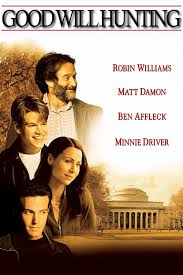
As you’ll likely know, the film that launched Matt Damon’s (and Ben Affleck’s) career was ‘Good Will Hunting’. They started writing it when Damon was 22 and Affleck was 20 – by the time they sold it they were 27 and 25 respectively.

If you haven’t seen it, you really should. “Good Will Hunting” made $200 million worldwide. Affleck and Damon picked up the Academy Award for Best Original Screenplay, and Robin Williams got the Best Supporting Actor gong. All in all, a rip-roaring success.

oscarsgoodwill

Miramax Films produced the film. It’s one of the best movies they’ve ever made.

But, they weren’t always Affleck and Damon’s first choice producers. In fact, there were loads of film companies who were courting the script.

Why did Miramax close the deal?

Because they took the time to actually read the whole script.

Seems obvious, doesn’t it? But the initial company they were working with, Castle Rock, didn’t quite play to that rule book. They were asking for re-write after re-write, and while Damon & Affleck were happy to oblige…it got a bit tiresome after a while.

And they started to wonder whether anyone was actually reading it.

So, Damon decides to spice things up. He includes a random, gratuitous sex scene right in the middle of the film. It comes quite at random, and includes two characters who aren’t into each other in that way. Williams & Damon. It completely didn’t fit with the story at all.

They submitted this new draft and…

…heard nothing.

No a peep from Castle Rock.

So they decide to circulate their script around a few other companies. And eventually, Harvey Weinstein – one of the guys from Miramax – calls them.

He loves the film. Wants to make it. But, his only question is – what’s with that sudden sex scene, it doesn’t fit in with the film at all…?

What was the reply from the Damon/Affleck camp?

‘That’s the scene that we wrote to find out whether people in your job actually read the script, because every studio executive we went to … no one brought that scene up, or maybe people thought it was a mistake or maybe nobody read it themselves.’ They said, ‘You’re the only guy that brought it up. You get the movie.’

Who knew that actually paying attention and fully reading the things that creatives drop at your door could lead to a $200 million success?

It’s tru, man…

I don’t pretend to be any kind of an expert on American politics, but I’m aware that they once had a president called Harry S. Truman. A man who, quite naturally, had a lot of important decisions to make during his time in office.

And, as with the debates in England right now, (and regardless of my personal political views) I can’t help but think about how much of a tough gig it must be as the leader of a country.

The decisions I make during the day are usually as pulse-racing as ‘shall I put a wash on tonight’ or ‘which TED talk looks the best?’. Decisions that, by and large, have little effect on anyone else outside of my small social/family circle.

But I am a fan of accountability. If I do something wrong, and I believe it’s my fault, I’ll hold myself accountable.

This is something I always bear in mind while taking criticism from others. As much as I’d like to one day be the greatest writer who ever did live – I’m aware that what I write isn’t always going to be perfect. Particularly if I’m writing for a client.

So I’m always open to suggestion and if I’ve done something that’s not good or wrong – I’ll change it. Too often I see many of us looking to blame, rather than accepting responsibility.

While I’m all for making my own way, I’m aware that – to progress as a creative – you need to accept that the fact the sun doesn’t shine out of your derriere 24/7 and that your work won’t always be top-drawer right away.

It’s the same if you let people down in project work, or if you mess up slightly in a meeting. As we all like to say “we’re only human”. It’s true…or ‘tru’.

Why do I choose Truman for this piece?

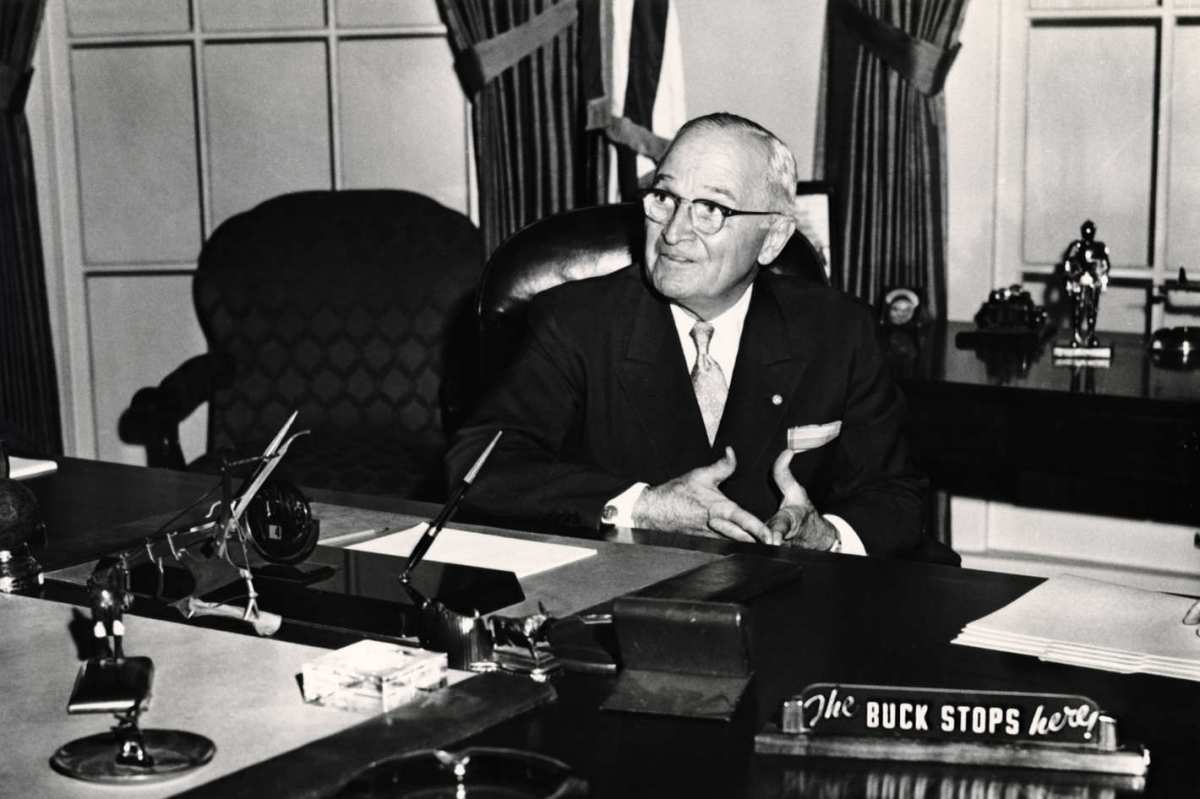
Well, below you can see the featured image for this article again…may I draw your attention to the sign on his desk. Something we should all keep in our heads as we go through our days…

truman

How kebabs can teach you not to bullshit

I didn’t write yesterday because I spent a good part of the day chasing up leads for a new car.

Buying a car takes a lot of thought. Aesthetics, reliability and character need to be in abundance for me to even think about exchanging monies.

My adventures took me to a small coastal town, and as is common when you’re near the seaside, I indulged in a traditional dish of chips. Simple, honest food with a dash of ketchup, a spatter of vinegar and a generous dollop of Ketchup.

Sadly it was ketchup from one of those sachets which require you to have a degree in engineering to even open them.

It was while I sat there that I saw something of beauty. It was an advert for kebabs. Now, I don’t really eat them myself so initially I disregarded it.

20170530_175558

But, then my attention was drawn back. I realised that it was a near perfect advertisement.

The language was clipped and easy to follow. The picture caught the eye. The benefits were clear.

I could even overlook the lack of punctuation as it was just so easy to read. Sometimes it doesn’t take a writing degree to write some good copy in order to flog something.

It knows the target audience – speaks directly to them, and sells the product. No bullshit, no being too clever and no glossy language.

The art of cutting out the bullshit and getting to the point is in danger. I’m all for pretty prose and slick sentences, but sometimes you don’t need either.

Of telescopes and Freddie Mercury

The modern telescope – great, isn’t it?

Fairly easy to make and use, and with thousands of possiblities as to what you can do with it. Many of them life-saving or life-changing at the very least.

When I was a kid I saw a cartoon once where a meteorite was heading towards Earth.

They used a telescope to check it out, and in doing so noticed it early enough to save the world. Very technical stuff indeed.

Years, later the plot from that cartoon was nicked by Armageddon…but hey ho.

In all seriousness though, it’s hard to see why anyone wouldn’t like the telescope isn’t it?

tintin
(Tintin and the Shooting Star)

However, as is human nature, there’s always someone with a problem.

The telescope was initially conceived in Holland, but after hearing about it Galileo was quick to act and made one of his own. As a result of the exposure he gave it, he’s generally credited as the inventor.

So, there he was – showcasing this fantastic creation to the world, and while the majority were thrilled there were some who weren’t as enticed.

The moral conservatives of the time felt that it was wrong. And that the telescope was giving humans an extra power that they shouldn’t have had, a power not given naturally.
Galileo stuck true to himself and his passion won over the masses – the telescope soon became a big hit and thus history was made. Although, he did admittedly remain a bit of a controversial figure in his lifetime.

What’s our lesson here?

Nearly everything we do, no matter how innoculous it seems, will generate criticism. Even the greatest ideas you have will be doubted by some. But, as long as you believe in the idea you need to show your passion to those around.

Galileo did.

And became such a hit that he’s even referenced in a Queen song.

Practicing what you preach ft. Walt Disney

I tell you what feels great.

The feeling you get when you actually practice what you preach.

I often harp on about how you should try and do something a little different, and force yourself to do something out of your usual comfort zone.

Well here I sit, just an hour or so away from jumping on a coach to London for an all-night Disney marathon.

Apparently it’s supposed to be a pyjama only affair, but I haven’t had a pair of those since I could grow stubble.

I wonder what I’ll learn. I think I’ll be inspired.

The water

There’s something about being in the water.

The sense of freedom when you’re underwater is almost second to none. 

Laws that normally hold you back, such as gravity, don’t even register.

There’s also a little bit of danger with water. After all, it isn’t our natural habitat.

And we can only be there for a little while.

For a second we touch lives with those who dwell there. But then, as our human limitations kick in, we have to return back to where we came from.

But while I was there, floating upon the edge of another life, I couldn’t help but think creatively.

3 creativity hacks that will help you.

You create things every day without thinking.

Whether it be a thoughtful ‘happy birthday’ post on a friend’s Facebook wall, a nagging email to the colleague who keeps using your instant coffee or a doodle on the side of your notepad.

So, how come when you set down to write that bestseller, or to draw that masterpiece we’ve been imagining, it can be so hard to get going?

I’m sorry to say that there’s no easy fix.

No magic tablet that, once you swallow it, makes you more of a creative juggernaut. If only that film Limitless was real, ey?

Here are 3 creativity hacks that might just make things a little easier…


Here are a few things that can be done to get the creative juices flowing.

FUEL


Your mind is a vehicle. If you don’t put the right fuel in, you’re not gonna get the right results out.

And, if you put nothing into it at all…well, you’re not going to get anywhere.

If you want to create, you need to read. 

A wide breadth of things. In my current ‘to-read’ list I’ve got everything from a book on spin doctors to an account of Voodoo activity in Haiti. Neither of those are topics I’m looking to pursue – but that doesn’t mean that there aren’t elements there that won’t inspire me.

fuel

Let’s say you’re writing a fantasy book.

You’ve read all the classics and some contemporary pieces, and you’re still out of ideas. Why don’t you read about politics?

I mean after all, most fantasy worlds have some sort of government…in fact they’re often run by extreme dictatorships – maybe you could draw inspiration?

“Big ideas come from the unconscious. This is true in art, in science, and in advertising. But your unconscious has to be well informed, or your idea will be irrelevant. Stuff your conscious mind with information, then unhook your rational thought process. You can help this process by going for a long walk, or taking a hot bath, or drinking half a pint of claret. Suddenly, if the telephone line from your unconscious is open, a big idea wells up within you.” – (Ogilvy, David – Ogilvy on Advertising.)

33.3


I’ve already covered this tip on another post – but it’s such an important one that I think it belongs in any list.

Often we force ourselves to be creative, and it doesn’t really work.

In my final year at University, I’d schedule days and days to be in the library to work on my final project. But yet, words didn’t come at times – everything around me was distracting. The more I tried to stop myself from being distracted, the more distracted I was.

I wish I’d heard of the 33.3 method then. Basically a mega-productive author and copywriter, Eugene Schwartz, worked out that the maximum time he could be creative for was 33 minutes and 3 seconds. During that time he’d ban himself from leaving the chair, and once the timer went off he go be distracted for ten minutes and then return for another 33.3 spell.

It really works. I know a lot of writers who have employed this, and it’s a good ‘un. I reckon it could work for making music or designing something too.

SIX THINKING HATS


This technique works best if you’re working on a group project, but I reckon you can also do it when working solo – it just requires a bit of role-play. No the Dungeons ‘n’ Dragons type, mind you.
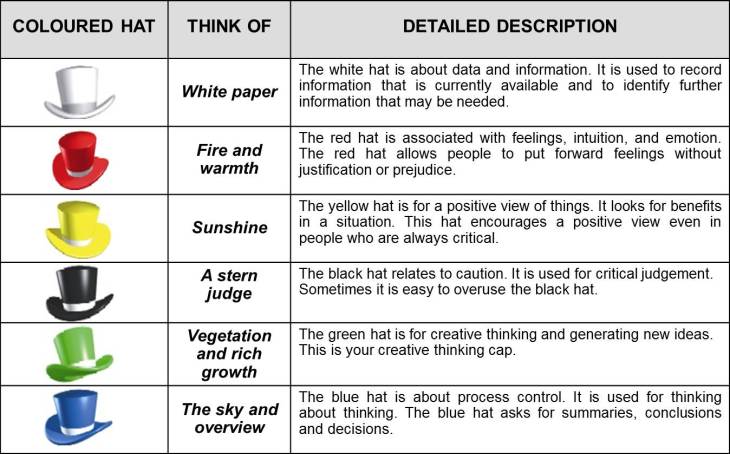
Six-Thinking-Hats1.jpg

(http://johnkapeleris.com)

It was originally thought up by Dr. Edward De Bono. It works well once you’ve got the basic concept of what you want to do. If you put on each hat and analyse what it is you’re going to be creating you should have a better idea by the end of it.

More a preparation technique…but I don’t believe that preparation inhibits creativity.

So, there you have it…


Those are just a few things that I’ve found that help me. They’re also good for productivity in general.

If you’re passionate about being creative, you should also be passionate about being productive.

Particularly if you don’t get much time to be creative in your daily life.

“Productivity is being able to do things that you were never able to do before.”
~ Franz Kafka