Making it past the first round…

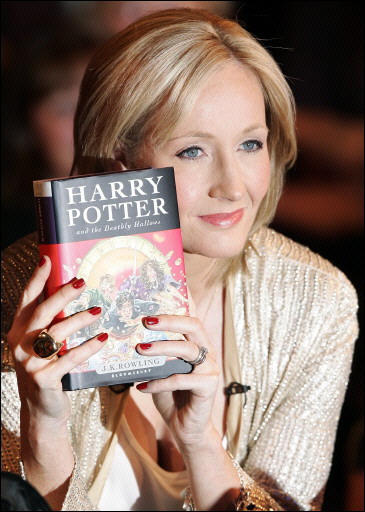
“The first draft is just you telling yourself the story”

– Terry Pratchett.

I’m currently writing the first draft of a novel, right now I’m 25k words in. Some days it’s a struggle, but other days my words flow like the rocky rapids.

On the slower days it’s easy to get disheartened and to lose interest.

So, this is a quote that I keep coming back to whenever I find my foot slipping off of the metaphorical gas pedal.

Because, as I’ve mentioned before on this blog, we all have our own graveyards full of our abandoned projects.

I don’t want this one to be buried there too.

Striving for progress is important.

You just need to make sure that you reach the destination, sometimes that can be the hardest part.

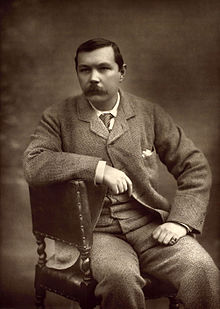
Sir Arthur Conan Doyle

“I consider that a man’s brain originally is like a little empty attic, and you have to stock it with such furniture as you choose. A fool takes in all the lumber of every sort that he comes across, so that the knowledge which might be useful to him gets crowded out, or at best is jumbled up with a lot of other things, so that he has a difficulty in laying his hands upon it. Now the skillful workman is very careful indeed as to what he takes into his brain-attic. He will have nothing but the tools which may help him in doing his work, but of these he has a large assortment, and all in the most perfect order. It is a mistake to think that that little room has elastic walls and can distend to any extent. Depend upon it there comes a time when for every addition of knowledge you forget something that you knew before. It is of the highest importance, therefore, not to have useless facts elbowing out the useful ones.”

Sir Arthur Conan Doyle

DCI John Luther

“Oh, I know. In order to get to the next level, you need a lot more points. And correct me if I’m wrong, but you need a… a boss. You need to kill a boss. Well, I’m the man at the end of that level, aren’t I? I’m the man that’s chasing you. I’m that boss. If you beat me, you get to play on. You’re gonna like this. Check it out.”

– DCI John Luther, (Luther).

I didn’t write today because I found myself sucked back into the world of Luther. It’s a series that I watched a couple of years back, and really enjoyed.

I used to always think that there wasn’t enough time in the world to re-read books you’d already read, or to revisit TV shows and films you’d already seen. But, maybe that’s not the case.

Watching it back reminded me how much I loved it the first time, and it also worked as a great example of a series of stories that really got the formula right. To thrill the viewer, anger the viewer and to keep then tuning in week after week.

In the saturated market of police procedural shows, Neil Cross has put some life back into the genre with Luther. Very good stuff, indeed.

(image credits – BBC)

The Ice Princess – book review

For the last decade or so Scandinavian crime novels seem to have accelerated in popularity to the point where they’re almost leading the way in the genre. With Larsson’s Millennium series, the Killing, the Henning Maskell books and Camilla Lackberg’s Patrick Hedstrom series being the most popular.

I wonder what it is about Scandinavia that makes it such a good host for a murder mystery? Perhaps it’s the long dark nights and the sometimes treacherous weather – because, it’s much harder to catch a killer after dark, right?

I’m a big fan of the Millennium trilogy (although, admittedly I need to finish the 3rd) and after enjoying a holiday to Copenhagen earlier in the year I knew I wanted to return to literary Scandinavia. After seeing lots of good reviews I tracked down a copy of ‘The Ice Princess’, and thus I was taken into the world of Erica Falck and Patrick Hedstrom.

While the subject matter is very dark, it’s also very funny throughout – which kind of threw me a bit. Certainly a contrast to Steig Larsson’s work. Now, while I do like humour, I’d picked this up so I could read a darker story. Lackberg’s comical description is a little too on the nose at times, some of the characters – such as the bumbling police Superintendent – would perhaps be more at home in a sitcom than a serious murder story.

I had also expected the main detective in the story, Patrik, to be something of a hard-bitten sleuth. He couldn’t have been further from that. Instead he’s a recently divorced 35 year old who spends half of the time chasing his high school crush – it’s only in the very last quarter of the book that he actually shows any pedigree as a detective.

The story involves the murder of Alexandra Wijkner – she’s found floating in a bath tub of ice, and it looks as if she’s committed suicide at first. The murder causes a lot of talk in the small community where she came from. At the same time her childhood friend, the biography writer Erica Falck, is back in town to look after the estate of her recently deceased parents.

One thing leads to another and Erica finds herself mixed up in the investigation. Shortly she bumps into Patrik Hedstrom, a guy who fancied her at school – now a detective. The two of them seem to revert back to their teenage years and start to have a giggly ‘does she like me/does he like me’ relationship.

All the while set against the backdrop of a murder – twist after twist shows us that there’s a lot more to Alexandra Wijkner’s death than meets the eye.

I liked the character of Erica, but she did jump from being very complex to remarkably uncomplicated within seconds. One minute a woman grieving for her dead parents, the next a young girl swooning over an old flame.

Admittedly though, I feel that my review is biased by the fact that ‘Millenium’ had set my expectations. If I had just read this as a random book, I might have enjoyed it more – going into it with an open mind.

I also wasn’t overly sold on the ending – there were a few subplots that I didn’t feel were full resolved. One of them being to do with Erica’s sister’s partner, although perhaps that’s explored in the next book in the series.

Camilla Lackberg has a sharp eye for writing about emotions and is genuinely really funny in some of her prose. Some of the dialogue is a little…odd…at times, but I wonder if that might be due to the translation to English. I know I noticed that a few times with Steig Larsson’s writing.

There was also some great commentary here about the kind of ‘what would the neighbours think’ society that often populates small towns. Growing up in one myself I can completely relate to what Lackberg means by this – it’s a theme that goes throughout the whole book, and even becomes central to the crimes.

For me this is a 3/5 – certainly not a bad book, it kept me entertained and engaged. But, it came across as too much of a ‘cosy’ mystery at times (despite the dark subject matter) – maybe I’ll read a few more in the series but I won’t be rushing out to buy them.

Outliers – book review

Outliers: the story of success

There’s something fascinating about success isn’t there?

I don’t know anyone who doesn’t chase it. Some secretly, some openly. Whether it be raising a happy family, gaining a promotion or making millions after finding a niche in the market.

“In fact, researchers have settled on what they believe is the magic number for true expertise: ten thousand hours.” 

It’s also easy for those of us who are still waiting for success, to look at people like Bill Gates and co with jealousy. Assuming that they bought their way to the top, or that they got ‘lucky’.

But Gladwell’s book blows the top off that, and leaves the reader with some fascinating insights into how situations and circumstances affect the success of your journey through life. Sometimes it really is as simple as being born in the right place at the right time…although, it’s often a little more complicated than that.

“No one who can rise before dawn three hundred sixty days a year fails to make his family rich.” 

After reading Matthew Syed’s ‘Black Box Thinking‘ and ‘Bounce‘ I was intrigued by Gladwell’s work – which is referenced by Syed many times. So I sought this one out, and was instantly drawn in by the flow of Gladwell’s prose. It’s easy to digest, but informative at the same time. A trait that many non-fiction writers lack in this day and age.

I devoured the first three quarters of the book in a frenzy of information and head-nodding ‘wow’ moments. The last part dragged a little for me and I’m not really sure why, as the tempo of the book was consistent. I had a few other books lined up to read and perhaps this made me hurry the reading process along.

My attention pricked back up by the last chapter, which recounts Gladwell’s own mother/grandmother’s story, and it was a welcome touch. I like it when non-fiction authors involve themselves in their works, it becomes easier to relate to.

“Success is not a random act. It arises out of a predictable and powerful set of circumstances and opportunities.” 

Overall a 4/5 for me – one of those books that’s fairly quick to read and full of interesting anecdotes and characters. All of them true. I’ll be reading Gladwell’s ‘Tipping Point’ in the near future. Consider me a fan.

P.S Check out Gladwell’s podcast ‘Revisionist History‘ if you’re into that kind of thing.

Aperol Spritz 

Apologies for being quiet over the last few days. Work took me out of the picture and away – which meant that I didn’t write.

I debated bringing a laptop, but as is the way if you bring a book somewhere, You spend half your time answering questions about what you’re doing (or ‘what you reading?’)

While out, I came across this advert and had to take a wonky (beer-induced) picture.

The simplicity and the colours really work on this.

And, as Aperol is such a popular name, they don’t even worry about putting anything complicated in the copy.

Simple. On point. Whets the appetite.