…it’s not the fact that only a small % of us will ever actually make it as professional writers.
…it’s not even the fact that the Twilight series was published.
Nope.
The scariest thing about writing is that every sentence that you write for an audience is a battle in its own right.
Because every sentence that you write is fighting for your audience’s attention, to get them to read the next one.
As you well know, we live in a time of constant distraction. The humble writer has to compete with Tinder alerts, PPI sales calls and Call of Duty deathmatches.
Never has the written word faced such a challenge. How many people do you know who genuinely find it easy to read long articles, or finish books these days?
This is especially applicable if you’re writing content for marketing. In ‘feeds’ full of other shareable content every word you write is a warrior of its own, fighting to slay the other posts around it so it can reel the ‘scroller’ in.
If you’re writing a book or a story, I guess you have a little more leeway – as your readership will have (most likely!) paid for what you’ve done.
And, when you’ve paid money for something, you want to give it the chance to prove that it was worth your money. I mean, no one wants to look like they make bad financial decisions do they?
Heaven forbid.
But, even then, too many pedestrian sentences and too little flair will soon turn your fans away.
So, there’s the thought for today. Every sentence that you write should promote the fact that it’s worth the reader’s while to read on.
A different type of creativity to what I usually talk to you about. But, creativity all the same.
Growing up as an Arsenal fan in the late 1990s there was no player who I admired more than Dennis Bergkamp.
Whether it was dribbling the ball past players, scoring incredible goals or pulling out match-winning bits of skill, Bergkamp had it all.
By that age I was sure I’d never be a professional footballer (I was right), but I remember remarking to myself that I hoped to be as good at whatever I do as he was at football.
I’m still trying.
But it pays to have heroes, and it’s worth reminding yourself that you can spread those who inspire you far and wide.
They don’t all have to be writers or artists, or whatever field it is that you do.
Inspiration is a rare thing to find – learn about your idols when you can. I recently ordered the most relevant book on Bergkamp to find out more about what made the legend.
Have you ever had so many things to do on your day off that you just didn’t know where to start?
…and, how often have you not got as much done as you’d like?
Can you relate to this quick clip from Channel 4’s ‘Peep Show’?
I know I do – particularly when it comes to writing. For those of us who aren’t yet making it as full-time writers we need to snatch time whenever we can to pursue it.
It’s also the same if you’re trying to become a sportsperson, a designer, a singer…etc.
But, when little problems and constant life admin get in the way, it’s hard isn’t it?
I guess that’s one of the reasons why ‘time management’ is such a buzzword, and has been for a long time now.
But…let me blow your illusion of time management out of the window by delivering the following news:
There’s no such thing as time management.
It’s all about how you manage yourself around time.
Because, let’s face it, there are no plans to extend the day any time soon so the playing field is going to stay the same.
You can use this to your advantage. After all, when you know what’s going to happen it’s easier to plan around it or for it.
Here are a few things that will help you maximise your creative potential:
GAIN AN EXTRA HOUR IN YOUR DAY
When I first started full-time work I worked out the exact time that it took me to wake-up, shower, dry-off, get dressed, eat breakfast and start my morning commute.
On the off-chance that you care, all of the above took me thirty-five minutes.
My bus left at 7.45. So, allowing time to get to the stop, I’d wake up at 7.
It worked well, but the slightest complication could slow me down.
It also meant that I had no time in the morning to do anything apart from get ready.
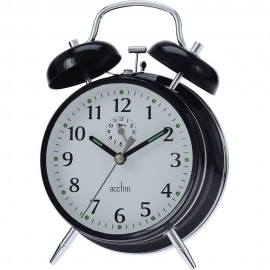
So…I set my alarm for 6.00. And kept doing it. After the initial ‘gah, this is early’ it soon became a habit. I found that I was less rushed in the mornings, got into work feeling more awake…and, most importantly, I found I had an extra 40 minutes to write.
Try it.
EMBRACE ‘ESSENTIALISM’ There’s this great book you should read. It’s by a successful guy called Greg McKeown and it’s called ‘Essentialism: The Discipline of Less‘.
Like Mark, the character in the Peepshow video at the start of this article, when we do have spare time it can almost be over-whelming as we have so many things we want to do. And, let’s face it, the more things you spread yourself over the less of an impact you tend to have.
So, take a look at what’s truly essential to your day. If you’ve got a day off, would you rather look back at something you’ve created or would you rather reflect on the endless games of FIFA you played?
Not so long ago, I had a day off and I had several writing projects that I wanted to do. I’d also recently bought an XBOX One game that I wanted to play.
So, once I got up and got sorted I thought I’d invest an hour into the game. An hour became another hour, which became half the day. By the time I’d stopped it was mid-afternoon and nearly all that writing time had slipped away. I was annoyed at myself.
So, here’s what I do now. I still do things such as watch shows and play games to unwind or procrastinate, but I set myself a limit. After half an hour of procrastinating, my alarm goes off and I move onto the next thing.
It’s so simple I know, but it works. You just need to remember that the alarm is sacred, and that the ‘just one more…’ mental argument needs to be overridden.
So, there we go – just a few things I practice myself when I need to make time to write. I often use them to make time to do this blog.
There’s plenty of reading available on time management – so it’s worth a Google. Plus, the Essentialism book is a must-read.
I do realise that my advice is all really obvious and there’s no amazing, super life-changing fix. But, as I always say, sometimes someone needs to point out the obvious as it can often be ignored for being too obvious.
It’s the same with weight loss really, for example – making small life changes will lead to success in the long-term.
I feel I should start off with a disclaimer – this isn’t about the really mediocre Adam Sandler film from a few years back.
Ha, what’s that you say…?
Which mediocre Adam Sandler film?!
You joker, you!
I mean the one that’s actually called ‘Click‘, of course.
This is what I mean by ‘the click’…
When I was at first school, circa mid-late 90s, there was a kid I used to sit near who never really said anything. Looking back now, I guess he was super-shy.
If you posed him with a question, he’d simply write his answer on his notepad and show it to you.
Whenever I tried to ask him anything, all he seemed to do was draw a picture of a stick man.
This confused me.
I wanted to borrow a rubber once. He scrawled something down, and tilted his notepad to show me.
It was a picture of a stick man.
Again.
In the end I went with the cavalier attitude of helping myself to the rubber. He never told me off, so I assumed all was fine.
One day, not long after he’d drawn one of his stick men, his notepad fell onto the floor and I picked it up.
As I handed it to him I saw that the word ‘OK’ was written on it. For a minute I was perplexed – how had a drawing of a stick man turned into the word OK?
AND THEN I REALISED!
I was always looking at his notepad sideways on!
He was writing the word ‘OK’!
It was just that, due to the way he wrote it and the angle I viewed it from (kinda sideways on), it looked like a stick man!
That was it. That was the ‘click’ moment. Something clicked for me that I’d been trying to understand for ages. Boy, did my eight year old self feel a fool for not working it out sooner.
I feel that we should translate this to writing. When you’re putting together text for an audience to read, it needs to flow. Nothing turns a reader off more than when they snag on a word or a sentence.
I have no authority on the subject…but I reckon that, if a reader snags more than three/four times while reading something, they’ll give up unless it’s important.
Before you post or share anything, you need to make sure it clicks. You need to review what you’ve written and keep on editing until it flows.
Edit it until it reads so smoothly that it feels as if the reader doesn’t even need to concentrate to read it.
Because you want everyone to read your content. You don’t want 70% to think you mean ‘OK’, and the other 30% to think you mean ‘stick man’.
As they say, writing is re-writing. If it doesn’t click, it doesn’t read well.
Next time you’re in front of that Word document, keep going until you CLICK.
I studied journalism at university. It was interesting.
After four years I graduated with a broken ankle, upper second class honours and a handful of social skills.
While there I went to a talk by the journalist and documentary maker, John Pilger.
(check out his site or his books if you’ve not heard of him before)
He said a lot of great stuff.
But, this was the line that has always stuck with me:
“Great journalism starts in the street”.
He’s right, you know.
But let me edit that quote to something more relevant to us:
“Great storytelling starts in the street”.
After all, writing is storytelling.
Writing your C.V? You’re telling the story of your career. Writing an advert, or copy for a site? You’re telling the story of your product. Writing a speech? You’re telling the story of why others should think a certain way, or do a certain thing.
It’s all kinda obvious really, isn’t it? But, sometimes I think someone needs to point out the obvious, because it’s so easy to discard or forget.
I guess that someone is me.
Next time you’re out take in your surroundings. Listen to the people around you.
Soak everything up and look for inspiration.
9 times out of 10 you’ll find that the audience you’re writing for will be made up of normal, everyday people.
Where will you find them? In the street, of course.
The more in touch you are with what every day people do and how they react, the easier it’ll be able to change your style to one they’ll connect with.
I once had to write an article about coffee tables.
I know nothing about them.
So, I spent an hour in House of Fraser – hovering around the furniture section, listening to families as they discussed their purchases.
I learnt the things people look for, and the things that put them off.
Do I need to get a life? Probably.
Did I learn a lot? Yes.
So there you have it, you can be inspired and you can learn from the world around you.
“There is no doubt that creativity is the most important human resource of all. Without creativity, there would be no progress, and we would be forever repeating the same patterns.”
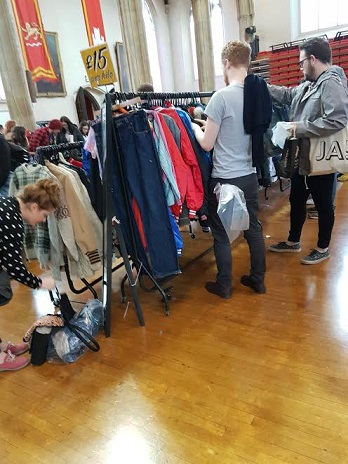
Today I didn’t write because I went to a vintage fair.
You know the ones I mean? Where a lorry full of veteran garments and lovable rogues turns up at your local city hall – determined to separate you from your hard-earned monies.
This one in particular was a ‘weigh & pay’ – basically you’re given a rather unglamorous cellophane bag and you fill it with clothes. A kilo costs £15.
There’s a good sales angle with this – you get to a kilo way faster than you’d suspect, and the prices only inflate from there.
A lot of the track-tops for sale took me back to my P.E days. If only I’d have been an entrepreneur at school – on my last day I could have tip-toed into the ‘lost property’ cupboard and pillaged their stocks.
Let them sit for another ten years or so I’d have a fortune on my hands!
Let’s face it, we’d all like to make our mark on the world by creating something truly original – but, it’s hard to do that.
I mean, everything has been done before hasn’t it?
But, as creators, vintage fairs should give us hope.
These clothes, which were new once – and which were also old and out of fashion once, have a new lease of life and a new market to be sold to.
Vintage fairs are busy, busy, busy and money certainly exchanges hands.
The organisers have found a new way to sell something old. And, as creatives, this is how we should look at things.
Reinvent, re-imagine, retell.
You remember that writer from years and years ago – Mark Twain? He said the following, and I think we all need to keep this in mind:
“There is no such thing as a new idea. It is impossible. We simply take a lot of old ideas and put them into a sort of mental kaleidoscope. We give them a turn and they make new and curious combinations. We keep on turning and making new combinations indefinitely; but they are the same old pieces of coloured glass that have been in use through all the ages.”
Take the movie “28 Days Later”. We’d all seen zombies before that. Those shuffling, decaying old things moving towards their prey with all the panache of a salt-ridden slug!
But then “28 Days Later” came along and we were introduced to fast-moving, rage-fuelled zombies.
These were something else! You couldn’t outrun them and you could barely outfight them. They’d smash your windows with all the force of a hurricane and they were smart-enough to find you afterwards. A locked bedroom door gave you little safety.
Thus audiences were interested again in a genre which hadn’t seen much originality since the 1960s/1970s when George A. Romero launched his “of the dead’ series.
It’s the same with business too. Look at Facebook – it wasn’t the first social media, was it? I can sure as hell remember using Myspace and bebo (for my sins) before that. Even one called ‘Facebox’, anyone give that a whirl back in the day?
Yet Facebook stood tall over them all. It captured our imaginations at a time when our lives were first saturated with the power of social media, and kept us in its thrall long after the competition had fallen in cyberhell.
Sure, it may not be as popular as it was once – but how often do you go a day without hearing the word ‘Facebook’ or ‘Facey B’ – depending on your social cricle.
I can recall a time when I’d use ‘Altavista’ or ‘Ask Jeeves’ as my preferred search engine of choice.
Fast forward ten years and I’m writing this blog post on ‘Google Chrome’ – can you remember the last time you used another search engine?
I can’t.
These ideas weren’t original, but that didn’t mean that they lacked the imagination and the drive to get to the top of the table.
A great example of how to fit creativity and information into a succinct post. Below I’ve decided to quote Trott’s description of what a story should entail:
“EVEN A NON-STORY IS A STORY
What are the universal structural elements of all stories?
1) Hook.
2) Build.
3) Payoff.
This is the shape any story must take.
1) A beginning that grabs the listener.
2) A middle that escalates in tension, suspense, stakes, and excitement.
3) An ending that brings it all home with a bang.
That’s a novel, that’s a play, that’s a movie, that’s a joke, that’s a seduction, that’s a military campaign.
It’s also your TED talk, your sales pitch, your Master’s thesis, and the 890-page true saga of your great-great-grandmother’s life.”



 There’s this great book you should read. It’s by a successful guy called Greg McKeown and it’s called ‘




 whyididntwritetoday.com