Fyodor Dostoyevsky and the importance of perspective

Perspective is the key to telling stories and understanding the best ways to communicate with people.

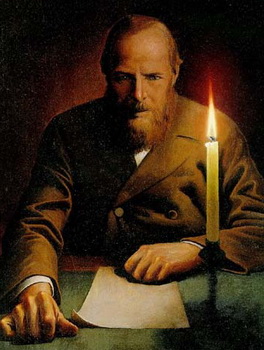
Fyodor Dostoyevsky is one of the most famous authors of all time. He grew up in Russia during the 1800s and his books – such as Crime & Punishment, The Idiot and Demons are still widely read today.

One of Dostoyevsky’s biggest skills in his writing, asides from his storytelling, was his ability to talk so deeply and truly when it came to mortality.

Mortality is, of course, one of most prevalent human issues and something that we all have in the corner of our minds. So, if an author can talk about this well, they’ll often get our attention right away.

Why was Dostoyevsky so talented when it came to talking about mortality?


Because he had a perspective very few of us will ever be around to share.

He knew what those last few seconds before death felt like.

In 1849 the ruler of Russia at the time, Nicolas I, had banned a lot of famous literature because he was worried that it might stir up revolution.

Being classically non-conformist creatives, Dostoyevsky and his friends had decided to try and read those books. But, unfortunately for them, Nicolas I caught and arrested them.

They faced the death penalty…

So, on a cold day in Saint Petersburg, Dostoyevsky and his friends were blindfolded and lined up in front of a firing squad.

A few moments ticked by.

The Commander motioned for his men to take aim.

Dostoyevsky and co winced as they heard the soldiers preparing to fire.

Seconds before a plethora of triggers were pulled there came another sound…at first it sounded like heavy rain…but soon they realised that it was a horse & cart – approaching them at an electrifying pace.

Aboard the cart was a message from Nicolas I.

What was the message?

Simple. After some consideration Nicolas I had decided to imprison them rather than have them executed.

And, so they survived – and Dostoyevsky lived to write again.

But, this time he was armed with the knowledge of how those few hopeless moments before death felt. A perspective that few others had, and one that he could exploit in his writings.

As a writer, what perspectives do you have that no one else does?


by Ashley Brown 2018


Inspired by this great Quora article

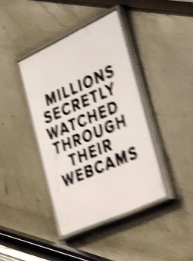
Millions secretly watched…

After a busy day of work I arrived at my nearest tube station. As I walked towards the escalator I was hit by the following:

bmtube1

And then, a few seconds later I saw:

bm2
(excuse photo quality)

Then next it was:

bm3.png

Thoughts danced around my head as to what it could be.

Was this some kind of media campaign?

Or, perhaps some conspiracy theorist had raised enough cash to buy tube adverts?

Whatever it was, these ads were so compelling because they felt like they could be real.

In fact, they feel like they are going to be real soon, if not already.

I noticed a lot of my fellow travellers were paying attention too.

Eventually I reached the escalator and saw that they were part of a campaign for the TV series ‘Black Mirror’.

Which, of course, makes complete sense in hindsight.

Now that’s good advertising.

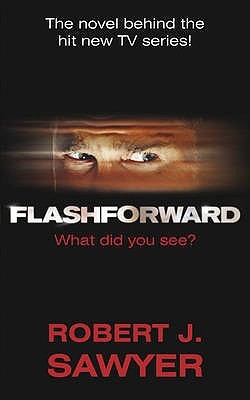
Flashforward – book review

Many people stopped Lloyd on his way back; it seemed there was a new theory being put forth every few minutes and old ones being shot down just as frequently.

I’ve lost myself in non-fiction books recently. So much so that finally I decided that enough was enough and that I should make sure I read at least one more novel before 2017 flashed away before my eyes.

In my first year of University (2009) the TV series of Flashforward came out and received a lot of initial praise, although I have a feeling that was short-lived. I watched the first episode but never took it any further.

So, let me see if I understand you, Dr. Simcoe. You’re contending that the visions aren’t of just one possible future. Rather, they are of the future – the only one that exists.

Flash forward some 8 years and, when I searched my mind for a novel I wanted to read, ‘Flashforward’ came stirring out of an archive of memories to the top – I’m not quite sure why.

It has an intriguing plot. In a nutshell, the world completely stops for a period of 2 minutes and everyone passes out. During this time everyone has a vision of their life some 20+ years into the future. Some startling, some happy.

There seems to be a lot of supporting evidence from other people’s visions that you really are dead in 2030, Theo.

Lloyd Simcoe and Theo Procopides are two scientists who were carrying out a huge experiment at the time – many believe (including the men themselves) that their experiment had somehow inadvertently caused this slip in the window of time.

While some of the narrative follows Theo and Lloyd – there’s also a lot of time dedicated to how the world would react to an unexpected glimpse of the future. Businesses go bankrupt, insurance companies fold and some of the population even commit suicide as they realise that they’ll never reach their dreams.

But the fact that he was dead altered everything.

Before the vision Lloyd was fully intent on marrying fellow scientist, Michiko – but, in the vision, he sees himself happily married to another woman. Which leaves him in a moral dilemma. Even though he loves her, is it worth marrying someone who you know you won’t end up with?

But…the bigger question that underpins Lloyd’s worries…can the vision of the future that they’ve seen be stopped, or is it unavoidable?

His eyes looked into the mirror as he passed, and he saw himself…for a half-second he thought it was his father. But it was him. What hair was left on his head was entirely gray; that on his chest was white. His skin was loose and lined, his gait stooped…

My favourite character was Theo and his story is by far the most fascinating. He doesn’t actually have a vision. Which, he concludes, means that he’ll be dead – even though he’ll only be 48 at the proposed time in the future!

But, things take a further turn for Theo, when he is contacted by some randoms who tell him that, in their visions, they were reading newspaper clippings about his murder!

Theo had once read a Lord Dunsany story about a man who fervently wished to see tomorrow’s newspaper today, and when he finally got his wish, was stunned to discover it contained his own obituary. The shock of seeing that was enough to kill him, news which would of course be reported in the next day’s edition.

What follows is a cracking subplot where the, ever-so-slightly selfish, Theo tries to find out any clues he can to prevent his murder from happening. But, as with Lloyd’s problem, is the future fixed or can it be changed?

This may sound obvious, as it is a science fiction piece, but there’s a lot of science here. Lots of models and theories. They’re easy enough to follow and I understand why they’re there…but they do bog down the narrative in places.

I didn’t tell you everything, Frau Drescher. I…twenty-one years from now, I’m dead. And your son, Helmut Drescher, is a detective with the Geneva police. He’s investigating my murder

What gets me about this novel, and what was most compelling, was the idea of Theo racing around the world interviewing random people whose visions may help him found out who his murderer is set to be.

As a stand alone story, without the rest of it, this would have been a great idea.

Bottling Christmas

When I was a kid my favourite part of Christmas was Christmas Eve.

I just loved the anticipation and the build up.

I’d always stay up as late as I could manage – thoughts dancing around my head.

What was I going to get? How was the day going to go? What was the food going to be like?

But, mostly, what was I going to get.

When you’re that age I guess you don’t understand that Christmas is more a time for bringing people together.

There was something about those Christmas eves and the build-up that I wish I could have bottled.

Maybe it was just because I used to always watch the Muppets Christmas Carol on that day.

Real talk

“I don’t trust someone who is nice to me but rude to the waiter. Because they’d treat me the same way if I was in that position”

– Muhammad Ali

Now, that’s some real talk right there.

As technology becomes more advanced and we become more lost in our phones, feeds and notifications I think social skills will slip.

Which means that, for those of us who still retain our social skills, we’ll be in a better position to influence our way to where we want to be.

‘Everything that can be invented, has been invented’

You’ve probably never heard of Charles Holland Duell.

He was the commissioner of the United States Patent and Trademark Office, and died in 1920.

So, unless you’re mega old or mega interested in patents, there’s no reason why you’d know him.

But, here’s his most famous quote – which was allegedly uttered in 1899:

“Everything that can be invented, has been invented”

(Historians and the like have made several attempts to prove that he didn’t actually say this – for the sake of the post, let’s say he did).

Now, as I look around a world where AI and robots are becoming part of every day life, I can’t help but wonder…where will we go next? Where will it end?

And, most importantly, are we happier?

But those are questions for another blog.

What is clear is that, as creatives, we need to make sure that we’re not like Duell – we can never stop thinking about the future and the next step.

Imagination drives innovation, so don’t kerb it. Everything that can be invented hasn’t been invented yet.

“You don’t have to reinvent the wheel”

“You don’t have to reinvent the wheel”.

It’s an expression you’ve probably heard a lot.

It’s certainly one that I’ve both heard and said a lot.

For what it’s worth I think it’s true. The wheel is tried, tested and proven. It’s a simple bit of technology and, asides from the occasional puncture, doesn’t have any flaws.

But, yet, when you get given a brief…or when you’re starting out on a project…it’s tempting to try and be as out there as possible.

But creativity doesn’t have to be far-flung and magical. Sometimes it’s just a case of tweaking what you’ve already got to get better results.

Keep a sense of creative discipline, if you don’t have to go outside the box…you don’t have.

P.S if you were going to try and reinvent the wheel, how would you do it?

If it was me and I was reinventing the wheels for a bus, say, I wouldn’t bother. The wheels are fine. So, instead, I’d take my budget and spend it on making the in-journey experience as good as it can be. TVs, mini-bars, etc.